US Senate Advances Russia & Iran Sanctions Bill
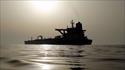
In a bipartisan vote, 86 senators voted to move forward with the Russia and Iran sanctions bill, championed by the late Sen. Lindsey Graham. Tuesday's vote came just hours after senators gathered to honor Graham's memory, which was immediately followed by a closed-door meeting with Ukrainian President Volodymyr Zelenskyy.
With a vote of 86-12. Sen. Rand Paul (R-Ky.) was the only Republican to vote against it.
While Tuesday's vote was a procedural vote, leadership expressed hope that the strong bipartisan support will allow for an expedited path to final passage. Graham's bill would impose 100% secondary tariffs, targeting countries that continue to buy Russian oil and gas.
The bill will also target Russia's "shadow fleet," a network of aging tankers used to evade Western sanctions while exporting Russian oil. - ABC News
29/07/2026
No Hormuz Passage for Those Taking Payouts from Iran’s Frozen Assets: IRGC
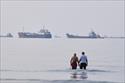
Iran warned countries and international companies that receiving any compensation payment from Iran’s assets frozen abroad will mean they will be completely cut off from transit in the Strait of Hormuz. Iran’s Khatam al-Anbiya Central Headquarters announced on Tuesday that it views a recent announcement by US President Donald Trump about compensating countries and entities for damage inflicted on their ships in the Persian Gulf from Iran’s frozen assets as “illegal”. The command, which is in charge of coordinating Iranian armed forces during war and crisis times, said ship owners will face consequences if they receive such compensation.
“…we declare to all companies and countries that welcome Trump's proposal and use Iran's blocked assets under this pretext, that from now on, the Armed Forces of the Islamic Republic of Iran will not allow any of their vessels to transit through the Strait of Hormuz,” said the statement. It added that the damage caused to cargo ships and tankers in recent months has been a result of the insecurity caused by the US military in the region. It also said that ships that have suffered damage have violated navigation protocols announced by Iran for safe sailing in the Strait of Hormuz and have chosen to travel “through the illegal and unsafe route” south of the Strait.
Iran has imposed strict controls on transit through Hormuz since the early days of the US-Israeli aggression on the country on February 28. Iran agreed to gradually ease the restrictions under a memorandum of understanding signed with the US last month that sought to permanently end the aggression and lift sanctions from the country. However, passage through Hormuz came under renewed checks and controls after the US failed to uphold those terms of the understanding that exclusively delegated the responsibility for controlling the strait to Iran.
The Khatam al-Anbiya Central Headquarters also in an earlier statement warned the United States that threats against Iranian commercial vessels and oil tankers will not go unanswered, as Washington persists in its war of aggression and attempts to impose an illegal naval blockade on the Islamic Republic. It noted that over the past days, American forces have threatened Iranian ships operating in the country’s coastal and territorial waters as part of their unlawful efforts to enforce a maritime siege against Iran. “This action by the United States is regarded as the expansion of war in the region,” the statement stressed. “Just as the Armed Forces of the Islamic Republic of Iran have proven on the battlefield, they will not leave any threat or act of evil by the terrorist army of that country unanswered and will confront it decisively.” The headquarters reaffirmed Iran’s unwavering determination to defend its sovereignty and maritime rights against foreign provocations.
The Islamic Republic has repeatedly demonstrated its capability and resolve to protect national interests and respond appropriately to aggression, ensuring that regional stability cannot be undermined by external powers seeking confrontation. This latest warning comes as the US continues its pressure tactics against Iran through illegal means, which Tehran has consistently rejected as clear violations of international law and a direct threat to peace and security in West Asia. Iran and the US signed the memorandum of understanding last month to end the cycle arising from the latest bout of unprovoked American-Israeli aggression against the Islamic Republic, which had begun on February 28. Under the understanding, Iran agreed to allow fee-free maritime transit through the strait for a period of 60 days. In compliance with the MoU, the Islamic Republic devised a special maritime route for vessels to cross the chokepoint, while warning against transit through illegal routes. The US has, however, been trying to escort transit through the strait along an illegal passageway, prompting the Islamic Republic to shut the corridor until Washington ended its interference in regional maritime movement. - Iran Daily
29/07/2026
No Change to Subsidized Fuel Prices, Iran's Govt. Spox Says
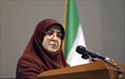
The government confirmed that there will be no increase in the price of subsidized gasoline, while any future changes to the price of non-subsidized fuel will be announced officially.
Government spokesperson Fatemeh Mohajerani dismissed rumors of an imminent fuel price hike, stressing that no final decision has been made regarding the price of non-subsidized gasoline. She said any adjustment would be communicated transparently once approved.
Mohajerani explained that motorists will continue to receive 60 liters of subsidized gasoline at IRR 15,000 (0.78 cent) per liter each month. A second quota of 50 liters is available at IRR 30,000 (1.57 cent) per liter, while any additional fuel is sold at the current station price of IRR 50,000 (2.63 cents) per liter.
She noted that recent attacks on the country's fuel production infrastructure have reduced gasoline production capacity, making fuel supply management more challenging. Iran currently produces around 100 million liters of gasoline per day, with additional imports requiring foreign currency allocations.
Reaffirming the government's position, Mohajerani said subsidized fuel prices will remain unchanged, while any decision affecting non-subsidized gasoline prices will be announced publicly and clearly.
She also highlighted ongoing efforts to reduce fuel consumption, including expanding the use of dual-fuel vehicles, investing in CNG infrastructure, offering free vehicle conversions to CNG, accelerating the replacement of aging vehicles, and urging automakers to produce more fuel-efficient cars. - Shana
29/07/2026
Iran Proposes to Oman Hormuz Plan Giving Itself Greater Control over Transit Lines
Iran has proposed to Oman a temporary arrangement to reopen the Strait of Hormuz under which one direction of traffic would pass through Iranian waters and part of the opposite route would also be in Iranian waters, Deputy Foreign Minister Kazem Gharibabadi told state television on Tuesday. Gharibabadi said Tehran rejected an Omani proposal for an equal division of transit routes between the two countries, saying such a plan did not address Tehran's security concerns until long-term regional stability is achieved.
He said the Strait of Hormuz would remain closed if Muscat rejected Iran's proposal, adding that Tehran had never recognised the southern route along Oman's coast. Gharibabadi also said Tehran had made it clear to Muscat that it no longer recognised the Traffic Separation Scheme (TSS), arguing that this pathway roughly in the middle of the waterway lies mostly within Omani waters and runs contrary to Iran's need to monitor transiting vessels after being attacked by the U.S. and Israel in late February.
The TSS, adopted by the International Maritime Organization, is currently unusable due to the risk of mines and has been replaced with Iran's northern route and Oman's southern route. "This is for national security and not bullying because when the TSS was for 60 years in Omani waters, we didn't say anything," Gharibabadi said. The Iranian diplomat also warned that Tehran would not allow any third country, even if invited by Oman, to de-mine the Strait of Hormuz. - Reuters
29/07/2026
Iran's IRGC Navy Says It Targeted & Stopped 3 Oil Tankers in Strait of Hormuz
Iran's Islamic Revolutionary Guard Corps (IRGC) Navy said early Wednesday that it "targeted and stopped" three oil tankers in the Strait of Hormuz after the vessels ignored its warnings, according to local media.
In a statement, the IRGC said the vessels were intercepted "a few hours ago" but did not provide details on the tankers' identities, ownership, locations or the nature of the alleged violations.
"The IRGC Navy once again warns that the illegal interventions and orders of the US, a child-killing army, will not go unanswered by vessels in the region," it said.
Tensions between the US and Iran have escalated in recent weeks, with the US carrying out attacks on Iran and Tehran responding by targeting what it says are US military facilities and equipment in countries across the region. - Anadolu
29/07/2026
Iran, Turkmenistan Examine Development Prospect of Transport, Energy, Infrastructure Coop.
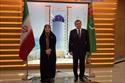
Rashid Meredov, Minister of Foreign Affairs of Turkmenistan, and Farzaneh Sadegh, Minister of Transport and Urban Development of Iran, as the heads of the Turkmenistan-Iran Economic Cooperation Committee, held talks at the Ministry of Foreign Affairs of Turkmenistan in Ashgabat.
According to the news portal of the Ministry of Transport and Urban Development, in this meeting, the two sides reviewed the current situation and development prospects of Turkmenistan-Iran cooperation, both bilaterally and within the framework of reputable international organizations, especially the United Nations.
The meeting also emphasized the importance of the principles of good neighborliness and mutual respect, which characterize the relations between the two countries.
Farzaneh Sadegh, Minister of Transport and Urban Development of Iran and the Iranian head of the Turkmenistan-Iran Economic Cooperation Committee, congratulated Turkmenistan on the adoption of the UN General Assembly resolution "International Year of International Law, 2028," which was proposed on the initiative of Turkmenistan and supported by Iran.
The two sides discussed trade and economic issues at this meeting and exchanged views on strengthening the role of the Intergovernmental Committee on Economic Cooperation between Turkmenistan and Iran.
The meeting also emphasized the two countries' shared commitment to continuing the development of cooperation in all areas of mutual interest.
In her trip to Turkmenistan, the Minister of Transport and Urban Development discussed and reviewed the implementation of joint agreements in the fields of transport, energy, gas, electricity, and infrastructure development, as well as the formation of a joint committee for the implementation of bilateral agreements.
During Farzaneh Sadegh's trip to Turkmenistan, a meeting was held with the President of Turkmenistan, the Minister of Transport, the Minister of Foreign Affairs, and the head of the economic committee of that country, and emphasis was placed on pursuing and operationalizing joint agreements in the fields of transport, energy, gas, electricity, and infrastructure development.
Sadegh said: We are proud to be present in Turkmenistan and held a very productive meeting with the President of Turkmenistan, the Minister of Transport, the Minister of Foreign Affairs, and the Turkmen head of the joint committee for economic cooperation between the two countries.
She added: In this meeting, topics such as improving the quality and quantity of the fleet, infrastructure development in all areas of transport, as well as issues related to energy, gas, and electricity were reviewed.
The Minister of Transport and Urban Development continued: It was also decided to form a committee under the Joint Economic Committee so that both sides can follow up on the issues raised and provide the ground for their operationalization. - Tehran Times
29/07/2026
New Funding Push for Iran's National Infrastructure Projects
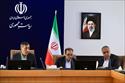
First Vice President has reviewed new financing strategies to accelerate the completion of major national infrastructure projects, following the president's directive to fast-track key development initiatives.
According to the government information center, a high-level meeting chaired by Executive Vice President Mohammad-Jafar Ghaempanah was held on Tuesday to assess the latest status of contractors' outstanding payments and address financial barriers delaying unfinished projects.
Ghaempanah stressed that the government is closely monitoring the progress of infrastructure projects and is committed to removing funding obstacles under the president's direct instructions. He said authorities are working to strengthen coordination among government agencies and maximize available financial resources to speed up the delivery of large-scale and strategic projects.
He added that the president has emphasized careful resource management, the adoption of innovative financing methods, and the rapid completion of unfinished projects to help the country navigate current challenges while improving public services.
The Executive Vice President also called for continued coordination between executive agencies, the Planning and Budget Organization, the Ministry of Economic Affairs and Finance, and other relevant institutions to resolve financial issues affecting infrastructure projects. He urged officials to ensure the meeting's decisions are fully implemented.
Officials and representatives from relevant organizations reviewed reports on contractors' outstanding claims and discussed measures to secure the funding needed to complete stalled projects.
The meeting also examined financial obligations related to priority projects under the Ministries of Roads and Urban Development, Energy, Health, Oil, and Industry, Mine and Trade, with decisions made on funding mechanisms for their implementation.
In addition, participants explored a range of financing options, including monetizing government assets, issuing financial bonds, and adopting new financial instruments such as asset tokenization. Officials reaffirmed their commitment to using all available legal and financial tools to accelerate the completion of unfinished infrastructure projects. - Shana
29/07/2026
GCC Identifies 5 Priority Industries to Boost Manufacturing, Reduce Imports
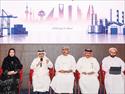
The GCC has unveiled five priority industrial investment opportunities aimed at attracting private sector participation, strengthening regional manufacturing and reducing dependence on imports as member states step up efforts to diversify their economies and build more resilient supply chains.
The projects were presented at a workshop organised by the Oman Chamber of Commerce and Industry (OCCI) in cooperation with the GCC General Secretariat and the Federation of GCC Chambers.
The initiative follows a decision by GCC industry ministers at their 56th meeting in April to endorse the findings of a study identifying priority industrial projects for promotion to GCC investors.
The workshop introduced private sector representatives to investment opportunities designed to deepen industrial integration, strengthen regional value chains and support sustainable economic growth across the GCC.
Yousef bin Ali Al Sunaidi, Director of the Industry and Mineral Resources Department at the GCC General Secretariat, said the private sector is a key partner in advancing economic diversification and enhancing the competitiveness of GCC industries.
He said the Unified GCC Industrial Development Strategy provides an integrated framework for industrial growth, with joint investment opportunities forming one of its flagship initiatives.
Lamia Al Shanfi of the GCC General Secretariat highlighted the role of the Economic and Development Affairs Authority in promoting economic integration among member states. She said the industrial investment initiative aims to strengthen regional manufacturing, reduce reliance on imports, enhance industrial competitiveness and create skilled employment opportunities across the GCC.
The project began with an assessment of 26 potential investments before narrowing the list to 15 promising projects and ultimately identifying five strategic opportunities.
Presenting the study, Dr Mohammed Al Buraiki of the GCC Organisation for Industrial Consulting (GOIC) said the initiative seeks to leverage the comparative advantages of each GCC country to develop integrated regional value chains and attract high-quality investment.
The five priority projects cover the manufacture of high-pressure seamless pipes for the oil and gas industry, sterile single-use surgical instruments, high-purity copper cathodes, silicon wafers for semiconductor production and multi-parameter patient monitoring devices.
Al Buraiki said the projects are expected to support the localisation of strategic industries, expand GCC exports, increase industrial value addition and strengthen the long-term competitiveness and resilience of the GCC’s manufacturing sector.
29/07/2026
JP Morgan Branch to Open in Iraq
An agreement has been reached to open a branch of JP Morgan in Iraq to finance projects implemented by American companies. The deal was agreed during a meeting in Washington between Prime Minister Ali al-Zaidi and representatives of the bank.
Earlier this month, it was reported that KAR Electrical Power Plant Production Trading FZE (KEPPT) had engaged JP Morgan to arrange development financing for a US$1.6 billion urea plant in Basra.
29/07/2026