Abu Dhabi National Oil Co. to Raise Crude Storage in India
The UAE's energy major ADNOC has announced two strategic collaboration agreements with Indian partners, reinforcing the strong and expanding UAE India energy partnership. The first agreement, with Indian Strategic Petroleum Reserves Limited, aims to increase ADNOC’s crude oil storage in India up to 30 million barrels, including existing storage at Mangalore and potential new storage opportunities at Vishakhapatnam and Chandikol. The agreement also explores potential crude storage in Fujairah as part of India’s strategic petroleum reserve, alongside potential LNG and LPG storage opportunities in India, supporting energy security and enhancing the resilience of UAE-India energy supply chains amid a challenging global shipping environment.
ADNOC also exchanged a strategic collaboration agreement with Indian Oil Corporation to explore expanded LPG supply and trading opportunities, including through ADNOC Global Trading, building on the companies’ existing LPG term contract in place since 2023 and supporting the development of a potential long-term LPG sale and purchase agreement. The agreement reinforces ADNOC’s role as a reliable LPG supplier to India and enables deeper integration across supply and shipping. The agreements build on ADNOC’s expanding partnerships with Indian companies across crude, LNG and LPG supply, as well as energy storage opportunities, supporting India’s growing energy demand and long-term economic growth.
Dr Sultan Al Jaber, ADNOC Managing Director and Group CEO, said: “India’s scale and growth trajectory make it one of the defining energy markets of our time. As demand accelerates alongside a rapidly expanding population, the strength of the UAE–India energy partnership becomes ever more critical. These agreements reinforce supply security, deepen our strategic ties, and underscore ADNOC’s role as a dependable and reliable partner in powering India’s long-term economic growth.”
More widely, the UAE and India share a deep and enduring relationship underpinned by a Comprehensive Strategic Partnership that has expanded significantly in recent years across trade, energy and infrastructure. Bilateral economic ties have strengthened further following the Comprehensive Economic Partnership Agreement, which entered into force in 2022, with both countries targeting $200 billion in trade by 2032. As one of the world’s fastest-growing major economies and a key driver of global energy demand, India continues to be a strategic priority for ADNOC and sits at the centre of key global energy growth trends.
18/05/2026
BP Mulling Sale of Some Egyptian Gas Assets

Oil major BP is considering selling some of its natural gas assets in Egypt, four people close to the matter told Reuters, as new CEO Meg O'Neill restructures the group to cut debt and refocus on more profitable projects. BP has invested more than US$35 billion in Egypt over six decades, producing about 60% of the country’s natural gas through joint ventures in the East Nile Delta and BP-operated fields in the West Nile Delta. No final decisions have been taken, the sources said. A BP spokesperson said the company does not comment on market speculation.
The West Nile Delta development includes five gas fields across the North Alexandria and West Mediterranean Deepwater offshore blocks in the Mediterranean. BP produced 518 million cubic feet per day of natural gas in Egypt last year, down about 40% from 2024 and nearly 60% from 2023. It announced in April a gas and condensate discovery off the coast of Egypt and earlier in the year was awarded the North-East El Alamein and West El Hammad offshore exploration concessions.
18/05/2026
Construction of New Pipeline Accelerates, Export Capacity via Fujairah Set to Double

The United Arab Emirates (UAE) is accelerating construction of a major new oil pipeline that will double ADNOC’s crude export capacity through the emirate of Fujairah, significantly strengthening the country’s ability to ship oil to global markets without relying on the strategically vital but increasingly vulnerable Strait of Hormuz.
The announcement was made following a meeting of the Executive Committee of the Board of Directors of Abu Dhabi National Oil Company, chaired by Abu Dhabi Crown Prince and Chairman of the Executive Committee Sheikh Khaled bin Mohamed bin Zayed Al Nahyan.
According to the Abu Dhabi Media Office, Sheikh Khaled reviewed ADNOC’s operational performance and was briefed on the progress of the new West–East 1 pipeline, which is under construction and is scheduled to become operational in 2027.
Once completed, the project will double ADNOC’s export capacity via the emirate of Fujairah, one of the world’s most important energy hubs located on the Gulf of Oman, outside the Strait of Hormuz.
Strategic Significance
The pipeline comes at a time of heightened geopolitical tensions in the GCC, with the Strait of Hormuz once again under close scrutiny following recent disruptions to shipping linked to the Iran conflict.
The narrow waterway between Iran and Oman handles roughly one-fifth of the world’s daily oil consumption and remains the most critical chokepoint for global energy trade.
By expanding export infrastructure through Fujairah, the UAE is reducing its dependence on Hormuz and strengthening its position as one of the world’s most reliable crude suppliers.
Building on existing Infrastructure
The UAE already operates the Abu Dhabi Crude Oil Pipeline (ADCOP), a 406-km pipeline connecting ADNOC’s onshore oil fields at Habshan to the export terminal in Fujairah.
Commissioned in 2012, ADCOP can transport around 1.5 million barrels per day (bpd) of crude, allowing a substantial portion of UAE exports to bypass the Strait of Hormuz.
The new West–East 1 project will substantially expand this capacity, giving ADNOC greater flexibility to meet growing global energy demand and to maintain exports during periods of regional instability.
ADNOC’s expanding global role
ADNOC has been investing heavily to increase production capacity, expand downstream operations and strengthen its international trading footprint. The company aims to raise crude production capacity to 5 million bpd while continuing to invest in lower-carbon energy solutions, gas, and petrochemicals.
The West–East 1 pipeline aligns with ADNOC’s broader strategy to enhance energy security for customers worldwide and reinforce the UAE’s role as a dependable supplier amid increasingly volatile market conditions.
Fujairah: A critical energy gateway
Fujairah has emerged as one of the world’s leading oil storage and bunkering hubs, with extensive tank farms, refining facilities and marine infrastructure. Its location on the UAE’s east coast provides direct access to the Indian Ocean, making it an ideal outlet for crude exports that avoid the GCC’s most sensitive maritime corridor.
With the expansion of ADNOC’s export capabilities through Fujairah, the UAE will further cement the port’s strategic importance in global energy logistics.
Responding to global market uncertainty
The decision to fast-track the pipeline reflects growing concern among GCC producers over the security of maritime trade routes. Recent attacks, seizures and heightened military activity in and around the Strait of Hormuz have underscored the need for alternative export routes.
For major producers such as the UAE, Saudi Arabia and Iraq, ensuring uninterrupted access to international markets remains a top priority.
By moving ahead with the West–East 1 pipeline, the UAE is sending a clear message that it is prepared to invest aggressively in infrastructure that safeguards supply and enhances resilience in the face of geopolitical risk, say analysts.
18/05/2026
Emerson Recognised by Saudi Aramco for Local Manufacturing Excellence

Emerson, an expert in automation technology and software, has been awarded the 2026 Saudi Aramco Local Manufacturers Quality Award, in recognition of its commitment to quality, manufacturing excellence, and long-term alignment with national industrial objectives.
The award was presented during an official ceremony held on January 29, 2026, at the Dhahran Plaza Conference Centre.
Hosted by Saudi Aramco’s Technical Services Executive Vice President, Wail A. Al Jaafari, the event celebrated companies that demonstrated outstanding performance in local manufacturing and product quality.
The award followed a formal quality assessment process conducted in coordination with Saudi Aramco’s technical teams.
Emerson’s Control and Safety Systems (CSS) organisation led the company’s participation in the evaluation and was represented at the ceremony in Dhahran.
“This recognition from Saudi Aramco underscores the strength of a long-standing partnership built on trust, technical rigor, and local execution,” said Hussein Zein, Vice President of Emerson in Saudi Arabia. “Our focus on quality governance, leadership accountability, and products manufactured from Saudi Arabia is central to supporting Vision 2030. This award reinforces Emerson’s role in contributing to a resilient and competitive industrial ecosystem in the Kingdom.
The Saudi Aramco Local Manufacturers Quality Award recognises organisations that demonstrate high performance in technical, operational, and quality metrics in alignment with the In-Kingdom Total Value Add (IKTVA) programme.
18/05/2026
NIC Plans Investment for Iraq's Al-Tayeb Economic City

A US$65-billion investment is planned to transform the Al-Tayeb border area into a multi-service economic city, according to the National Investment Commission (NIC). Commission Chairman Dr Haider Mohammed Makkiya (pictured) told the state-run Iraqi News Agency (INA) that Al-Tayeb is envisaged as an economic city covering more than 120,000 dunams, with total projected investments exceeding US$65 billion. Of this amount, approximately US$5 billion is allocated for infrastructure, including:
- Roads
- Electricity networks
- Sewerage systems
- Other core utilities
Makkiya said the location [in Missan/Maysan] benefits from abundant natural resources, including water, fuel, sand and gravel, as well as favourable terrain, which he said would support the development of a specialised economic city. He added that completion of a water-harvesting component remains pending, and that the project could be announced as an investment opportunity in the coming months. Makki also said that six investment cities have been identified based on the availability of natural resources, with multi-service economic cities potentially developed along the Development Road corridor.
18/05/2026
Drone Strike Causes Fire Outside UAE N-Plant
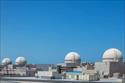
A fire broke out after a drone strike in an electrical generator outside the inner perimeter of the Barakah Nuclear Power Plant in the Al Dhafra Region in the UAE. No injuries were reported, and there was no impact on radiological safety levels, said an Abu Dhabi Media Office X post. All precautionary measures have been taken, and further updates will be provided as they become available, it said. The Federal Authority for Nuclear Regulation (FANR) confirmed that the fire did not affect the safety of the power plant or the readiness of its essential systems, and that all units are operating as normal, it added.
The Barakah Nuclear Energy Plant is located in the Al Dhafra of the Emirate of Abu Dhabi, approximately 53 km west-southwest of Al Dhannah City. The plant’s four APR1400 design nuclear reactors produce 40TWh annually which is equivalent to around 25% of the UAE’s electricity needs. The Barakah Plant is the UAE’s largest source of electricity, with every megawatt generated being produced carbon-free. The Barakah Plant is an important part of the UAE’s efforts to diversify its energy sources, providing clean and efficient energy to industries, homes, businesses and government facilities while reducing the nation’s carbon footprint.
18/05/2026
Egyptian Minister Names New Petroleum Leaders

Karim Badawi, Minister of Petroleum and Mineral Resources, has issued a new round of leadership appointments and transfers within the petroleum sector. Ehab Ragaee, First Undersecretary for Production Affairs at the Ministry of Petroleum and Mineral Resources (MoPMR), retired after nearly 36 years of service in Egypt’s petroleum sector, concluding a distinguished career that spanned both production companies and senior leadership roles at the MoPMR.
Badawi extended his appreciation to Ragaee, praising his long professional journey and the pivotal positions he held, from his early days as a reservoir engineer at the Gulf of Suez Petroleum Company GUPCO in 1990.In 2015, he was appointed Chairman and Managing Director of WAHA Petroleum Company and later served as Chairman and Managing Director of Tharwa Petroleum Company in 2021, before assuming his latest role as First Undersecretary for Production Affairs at the MoPMR in 2024. The minister praised Ragaee’s long professional career, noting that he held several key positions throughout his tenure, beginning in production companies before moving to the ministry headquarters, where he served as General Manager and later Head of the Central Administration for Production.
The minister also thanked Ashraf Bahaa, Chairman of the South Valley Egyptian Petroleum Holding Company (Ganope), for his service till he reached retirement age. Badawi commended Bahaa’s leadership career and his contributions across several major petroleum entities. He described him as one of the sector’s prominent leaders, having held senior positions at Engineering for the Petroleum and Process Industries Company (ENPPI) and Egyptian Maintenance Company (EMC), in addition to serving as Vice Chairman for Planning at the Egyptian General Petroleum Corporation (EGPC) before Chairing Ganope.
As part of the transfers, Ishaq Saad Ishaq Attia was appointed Head of the Central Administration for Crude Oil Production and Supervisor of Gas Production at MoPMR. Attia began his career in the sector at Agiba Petroleum Company in 1998 and gradually advanced through several positions. In 2023, he became General Manager of Operations and a board member at PetroGulf before later assuming the position of Chairman and Managing Director of the company.
Meanwhile, Samir Mohamed Mohy El-Din Mohamed Raslan was appointed Chairman of Ganope effective May 24, 2026. Raslan began his career as a department manager at Rashid Petroleum Company (Rashpetco) in 1995 and rose through the ranks until he was appointed Head of the Central Administration for Exploration Affairs, while also supervising contracts and agreements at the MoPMR in 2023.
18/05/2026
Gas Consumption Management Can Improve Public Welfare: Iranian President
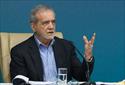
Iranian President Masoud Pezeshkian said revenues generated through better domestic gas consumption management could significantly improve people’s livelihoods and public welfare.
According to president.ir, Pezeshkian visited a mosque in Tehran on Sunday to review the implementation of a neighborhood- and mosque-centered governance initiative. During the visit, he was briefed on social networking efforts within local communities, the delivery of government services, and cultural and educational programs related to energy conservation and consumption reduction.
Pezeshkian stressed that reforming consumption patterns across all sectors, particularly in energy, is among the most important factors in strengthening the country’s economic resilience under current conditions.
He said energy consumption in some sectors far exceeds normal standards and noted that even under ordinary circumstances, consumption patterns needed to be corrected to prevent waste and improve resource efficiency. Given the country’s current situation, however, he described the issue as a vital and strategic necessity.
Highlighting the economic value of energy resources and the need for efficient management of national assets, the president said gas currently used to fuel power plants could generate substantial revenue for the country if domestic consumption were managed more effectively. He added that the resulting benefits could directly improve public welfare and living conditions.
Pezeshkian described avoiding unnecessary consumption and waste as a national and strategic responsibility.
He also accused Iran’s adversaries of attempting to pressure the country’s economy and create public dissatisfaction by disrupting energy supplies and public services.
“If we can manage and reduce electricity, gas and water consumption with public participation, in addition to neutralizing part of the economic pressure and conspiracies of enemies, it will also make it possible to administer the country in a stable and challenge-free manner,” he said. - Shana
18/05/2026