Attacks on Energy Infrastructure, Blockade Threaten Global Energy Security: Iran's President Says at GECF
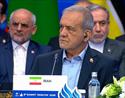
Addressing the eighth summit of heads of state of the Gas Exporting Countries Forum (GECF), the President of the Islamic Republic of Iran said geopolitical developments have put global energy security under serious strain. He also called for deeper cooperation among member states and declared Iran's readiness to play a more active role in the Forum.
Speaking in Moscow, the president began by expressing his pleasure at being in the "beautiful and historic" city. He thanked the friendly government and people of the Russian Federation, and President Vladimir Putin in particular, for hosting the important gathering. He also thanked the GECF Secretary-General and the Secretariat for their continued efforts to advance the Forum's activities. He then paid tribute to the memory of the martyred Leader of the Islamic Revolution, Ayatollah Khamenei, whose initiatives and support, he said, played a significant role in strengthening the Forum.
Security threats and unilateral measures
The president noted that the summit is being held as geopolitical developments pose serious challenges to global energy security. In this context, he described the military aggression of the United States and the Zionist regime against Iran, carried out on two occasions and in the middle of political negotiations, as one of the regrettable and dangerous events against global security. By destroying Iran's energy facilities and disrupting energy transfer, he said, the attacks endangered energy security and the world economy.
He also stressed that unilateral sanctions and "economic terrorism," in the form of a naval and aerial blockade imposed on Iran by the United States, together with pressure on other countries to comply with that blockade, are further unlawful measures that seriously jeopardize the stability of energy markets. These actions, he said, should be condemned by the world's major energy suppliers and effectively countered.
The president added that U.S. military interventions in the Persian Gulf region do not affect regional actors alone. By creating serious shocks, he argued, they disrupt the pricing, supply and transfer of energy and endanger global economic growth.
The Forum's role and priorities
Turning to the GECF, the president said that over more than two decades of activity it has become a symbol of multilateral gas diplomacy and a platform for dialogue, exchange of experience and stronger cooperation among its members. It can, he said, play an effective role in resolving the world's energy problems and bottlenecks.
He said it is particularly important to address the provisions of the Forum's statute and the declarations of its summits. He highlighted four priorities: developing technologies and methods for sustainable environmental management, developing regional and global gas markets, maximizing the role of natural gas resources in the value chain, and combating energy poverty.
The president said developments in the global energy market require member states to expand cooperation in two areas: "governance and strategic management" and "technical and engineering operations." In the strategic area, he said, the main focus should be on market stability and on how to increase the volume of natural gas trade regionally and globally.
In the technical and engineering area, he said, the key issue for members is developing joint investments across the gas value chain, from production to processing, transmission and consumption. At the same time, enhancing technological capacities to raise efficiency and reduce the environmental impact of gas production and consumption should be at the center of joint cooperation.
He said it is essential to turn existing capacities in member countries into operational projects serving shared interests. Effective implementation of the Forum's long-term strategy, in line with market developments and the long-term outlook for supply and demand, he added, can provide a clear path for aligning members' priorities and strengthening the Forum's role in the future of global energy.
Iran's gas capacities and offer to investors
The president said Iran, a founding member of the GECF and holder of the world's second-largest proven natural gas reserves, is ready to take a more active role in advancing multilateral diplomacy, exchanging knowledge and experience, and developing investment opportunities in gas infrastructure within the Forum's framework.
He said Iran's strategic position at the heart of the world's most important energy corridors gives it an inherent capacity to significantly improve global energy resilience. He added that the capacities of Iran's gas industry have created favorable grounds for private-sector cooperation among GECF members in the upstream and downstream gas sectors, as well as in gas trade. Foreign investors, he said, can use the incentives and facilities offered in the oil, gas and petrochemical industries without concern, and benefit from Iran's unique capacities within the framework of shared interests.
Despite years of unilateral sanctions, the president said, Iran has relied on domestic capabilities to raise its natural gas production capacity to 300 billion cubic meters and has maintained its position as the world's third-largest natural gas producer. In gas consumption, he said, Iran is one of the world's leading countries, with natural gas accounting for 70% of its energy basket, and 95% of its population is now covered by the national gas network.
Closing remarks
The president said Iran believes constructive cooperation can help secure supply and demand, ensure fair valuation of natural gas and raise its share in the global energy basket, while respecting environmental considerations. In this regard, he stressed the importance of the active participation of oil and energy ministers from member and observer countries, the Forum's Secretary-General and Secretariat staff, and of constructive cooperation among them.
In closing, he once again thanked the government and people of the Russian Federation for their warm hospitality and fitting hosting of the summit, and wished the Forum success in achieving its goals. - Shana
28/10/2026
Iran, India to Expand Trade & Banking Ties through BRICS: CBI Chief
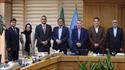
The Governor of the Central Bank of Iran (CBI), Abdolnaser Hemmati, has stressed the urgent need to deepen bilateral economic ties, facilitate trade, and strengthen banking relations with India through robust regional and multilateral frameworks.
During a meeting with India’s new Ambassador to Tehran, Vishwesh Negi, Hemmati highlighted Iran’s vast economic potential and called on New Delhi to fulfill its commitments regarding humanitarian trade interactions, ensuring that essential exchanges remain unhindered despite external pressures.
A key focus of the discussions was the strategic importance of the BRICS alliance.
Hemmati emphasized the necessity of developing shared financial and monetary mechanisms within the bloc to facilitate seamless cross-border transactions, reduce economic barriers, and neutralize the impact of unilateral coercive measures.
"Given Iran's significant economic capacities, bilateral cooperation can lay the groundwork for a substantial elevation in our economic and trade relations," Hemmati stated, underscoring the importance of leveraging multilateral platforms to secure sustainable financial channels.
Ambassador Negi, who officially assumed his post in early September 2026, reciprocated the sentiment. He underscored the necessity of elevating bilateral trade, strengthening international cooperation, and removing existing hurdles to ensure a mutually beneficial economic partnership between the two nations. - Press TV
28/10/2026
GECF Summit Constructive & Fruitful Iran's President Says
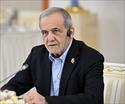
Iranian President Masoud Pezeshkian said Tuesday night that the 8th summit of the Gas Exporting Countries Forum in Moscow was constructive and fruitful, according to president.ir. Speaking before leaving Russia after a two-day visit, Pezeshkian said extensive and in-depth talks were held during the summit and that good understandings were reached.
He said he held productive meetings on the sidelines with Russian President Vladimir Putin and Qatar's emir, Sheikh Tamim bin Hamad Al Thani. Understandings were reached in a range of areas, including agriculture, oil and gas, road construction, security issues and bilateral cooperation, he said. "Overall, this trip was very good and effective," he said.
The forum's heads of state meet every two years. The first summit was held in Doha, Qatar, in 2011, followed by Moscow in 2013, Tehran in 2015, Santa Cruz, Bolivia, in 2017, Malabo, Equatorial Guinea, in 2019, Doha in 2022 and Algiers in 2024. The forum has held 27 ministerial meetings since its founding.
The forum has 12 full members, which together hold about 70% of the world's proven natural gas reserves, 38% of commercial gas production and 42% of global gas exports. Their share of liquefied natural gas exports is estimated at about 47%. - Shana
28/10/2026
Iran's Pezeshkian Urges Multipolar Order in Talks with Putin
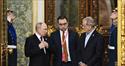
President Masoud Pezeshkian said Tuesday that countries in the Middle East can resolve their own problems without the United States, as he met Russian President Vladimir Putin at the Kremlin on the sidelines of the Gas Exporting Countries Forum summit.
Pezeshkian thanked Putin for Russian hospitality and for Moscow's political and economic support for Iran. "I am always glad to be here in Moscow," he said, according to kremlin.ru. Pezeshkian said Iran and Russia's growing trade cooperation shows the need for a multipolar world. He said it became clear to everyone that countries must work toward such a system after the United States took aggressive steps in the region. "A multipolar world is useful to all of us," he said, adding that it allows Iran to work with Russia and other countries that want to remain independent and free. He said countries in the region can work on all their problems without the US and should not count on American assistance, particularly those in the region that believe otherwise. "This is truly not so," he said.
Pezeshkian said Iran and Russia can help each other in science, economics, culture, humanitarian affairs and security. He noted that Iran held cultural events of its own in Moscow and Astrakhan, and said Russian Foreign Minister Sergey Lavrov recently visited Tehran and reported on the progress of bilateral cooperation. The Iranian president said Russian colleagues had asked for a Russian culture festival in Tehran and for permission to open a bureau of Russian media there. He said he had instructed officials to move quickly, and that the response was positive. All issues related to opening a Tehran bureau for Russia's state broadcaster VGTRK have been resolved, he said, and only routine work remains. Iran is ready to host Russian cultural figures for the festival and would be glad to receive them, he said.
Putin: Region Is Cause for Concern
Putin opened the talks by saying he was pleased to meet Pezeshkian again, this time on the sidelines of the gas forum. He said the summit had been productive and that the many bilateral meetings among leaders were also useful. He said he and Pezeshkian had just discussed the regional situation one-on-one. "Of course, this cannot but cause concern, and not only in us, but first of all, as a country that works closely with Iran," Putin said. He described the two countries as neighbors with many shared interests and said Russia hopes events will develop positively. Putin said Russia is fulfilling all its commitments in joint projects. He said Russian-Iranian trade turnover rose 10.4% in the first eight months of this year, and that construction continues on the Bushehr nuclear power plant. He said the countries also cooperate in the humanitarian sphere, with the number of Iranian students at Russian universities approaching 10,000. A series of Iranian culture festival events took place in Moscow, Kazan and Astrakhan in late September and early October, he said. Putin said Russia is always glad to see Pezeshkian in Moscow and to discuss current issues and the bilateral agenda.
Pezeshkian and Qatar's emir, Sheikh Tamim bin Hamad Al Thani, also met Tuesday on the sidelines of the Gas Exporting Countries Forum summit in Russia to discuss ways to expand bilateral relations and strengthen energy cooperation, the Iranian government's news service reported. The two leaders reviewed the latest state of ties between Tehran and Doha and stressed the importance of broadening political and economic relations and using existing capacities to raise the level of cooperation, the report said. Energy cooperation, expanded economic and trade exchanges, and stronger coordination among gas-exporting countries were among the topics discussed. The meeting took place at the forum's 8th summit of heads of state and government.
On the other hand, Iran's acting oil minister and Qatar's energy minister met in Moscow on Tuesday to discuss strengthening bilateral energy cooperation and expanding their presence in gas markets. Hamid Bovard met Saad bin Sherida al-Kaabi on the sidelines of the eighth summit of the Gas Exporting Countries Forum, known as GECF. The two discussed developing Iran-Qatar energy ties. Bovard highlighted Iran's strategic proposals for the GECF and urged effective cooperation among its members, especially major gas producers and exporters, to strengthen convergence and expand bilateral and multilateral talks. Bovard previously met al-Kaabi in Doha, where he also stressed expanding energy relations between the two countries. Bovard traveled to Moscow to attend the forum's 28th ministerial meeting and to accompany President Masoud Pezeshkian at the summit. He said energy security is inseparably tied to peace, regional stability, the security of critical infrastructure and respect for national sovereignty. He said U.S. military actions and unilateral economic sanctions have not only harmed the legitimate interests of the Iranian people but also hurt investment security and the predictability of global energy markets.
The summit brings together leaders of member countries and senior representatives. It offers an opportunity to review strategic issues in the gas industry and strengthen cooperation among gas producers and exporters. The forum's summits and ministerial meetings are held to exchange views on gas market developments, the supply and demand outlook, energy security and the place of natural gas in the global energy mix. The GECF has 12 full members: Algeria, Bolivia, Egypt, Equatorial Guinea, Iran, Libya, Nigeria, Qatar, Russia, Trinidad and Tobago, the United Arab Emirates and Venezuela. Angola, Azerbaijan, Iraq, Malaysia, Mauritania, Mozambique, Peru and Senegal are observers. Together, GECF members hold about 70% of the world's proven natural gas reserves, 38% of commercial gas production and 42% of global gas exports. They account for about 47% of liquefied natural gas exports. - Shana
28/10/2026
Qatar's Green Sky Capital to Invest in Sustainable Aviation Fuel Plant in Morocco
Doha-based Green Sky Capital will invest US$239 million in a Sustainable Aviation Fuel (SAF) production plant to be built in the Nador West Med port complex in Morocco. The planned facility is designed to process used cooking oil, fats and regional residues into green jet fuel using Hydro-processed Esters and Fatty Acids (HEFA) technology licensed by France's Axens. The plant targets an annual SAF production capacity of 200,000 tons and is to produce premium-quality green jet fuel as well as renewable diesel. The technology is described as an advanced second-generation process.
28/10/2026
Joint Oil Keeps Tunisia–Libya Offshore Bid Round Open Until December
Joint Oil Exploration, Exploitation and Petroleum Services Company (Joint Oil) has confirmed that its bid round for the Joint Oil Block and Zarat Discovery remains open until December 31, 2026, offering investors opportunities in offshore exploration and cross-border oil and gas development.
Launched on September 7, 2026 with appointed adviser Moyes & Co. (Moyes), the bid round covers acreage in the central Mediterranean’s Gabès–Tripoli Basin, a region surrounded by established oil and gas fields and offshore infrastructure in Tunisia and Libya.
The process comprises two commercial packages: further exploration of the Joint Oil Block under an Exploration and Production Sharing Agreement (EPSA), and development of the Zarat Discovery, a resource that straddles the Tunisia–Libya maritime border.
The Joint Oil Block covers approximately 3,000 square kilometres in water depths of 80 to 120 metres.
Available geological and geophysical data include 6,500 kilometres of two-dimensional (2D) seismic surveys and 1,900 kilometres of three-dimensional (3D) seismic data.
Five exploration wells have been drilled in the block: Zohra-1 in 1976, El Amal South-1 in 1999, Besmah-1 and El Amal North-1 in 2002, and Zarat North-1 in 2010.
Moyes’ technical assessment has also identified the Faisal Prospect within the Zarat closure and the Zarat Deep Prospect as potential sources of additional commercial value.
The second package focuses on developing the Zarat Discovery as a unitised oil and gas resource.
The project is expected to be governed by a Development and Production Sharing Agreement, Unitisation Agreement, Unit Operating Agreement and Operating Services Contract.
The acreage is close to several producing fields, including Libya’s El Bouri, El Jurf and Bahr Essalam, and Tunisia’s Hasdrubal, Ashtart, Miskar and Didon.
Proximity to these assets could provide opportunities to leverage existing infrastructure, improve operational efficiencies and access established export routes.
Joint Oil and Moyes are inviting qualified companies with demonstrated offshore exploration and development capabilities to apply for access to the Virtual Data Room and Physical Data Room, which will provide technical information on the opportunities.
The bid submission deadline is January 8, 2027, with successful bidders scheduled to be notified on February 26, 2027.
Formal awards are expected by April 30 , 2027.
The opportunity will also be presented to industry participants at the Geoscience Energy Society of Great Britain’s Africa Conference in London on November 12, 2026.
Joint Oil said the exploration and development packages offer potential partners exposure to the wider Sabratha–Gabès Basin system, where established producing fields and active exploration areas highlight the region’s hydrocarbon potential.
The bid round forms part of efforts to advance the Joint Oil Block’s exploration prospects and develop the cross-border Zarat resource through a structured commercial framework involving Tunisian and Libyan offshore interests.
28/10/2026
Oman’s Oil Output Rises in Jan-Sept
Oman’s oil production rose 12.3% in the first nine months of 2026, while the average price of its crude increased 14.7%. However, oil export volumes grew at a more moderate pace, according to official data.
Total oil production reached 305.14mn barrels during January-September, compared with 271.70mn barrels in the corresponding period of 2025, data released by the National Centre for Statistics and Information (NCSI) showed.
Average daily production increased to 1.118mn barrels in the first nine months of 2026 from 995,200 barrels a day a year earlier. Monthly production peaked at an average of 1.172mn barrels per day (bpd) in May, while September’s average stood at 1.170mn bpd.
Monthly production volumes moderated in September, falling to 35.12mn barrels from 36.22mn barrels in August and 35.79mn barrels in July, the NCSI data showed.
The average price of Oman crude oil reached US$82.6 per barrel during January-September, up 14.7% from US$72 in the same period last year. However, the monthly average fell to US$76.4 in September from US$79.1 in August and US$102 in July.
Oil exports increase 2.5%
Total oil exports increased 2.5% to 235.84mn barrels in the first nine months of 2026, compared with 230.18mn barrels a year earlier.
Meanwhile, the value of Oman’s oil and gas exports rose 23.9% to RO12.089 billion (US$31.44 billion) during January-August this year, up from RO9.759 billion (US$25.38 billion) in the corresponding period of 2025.
Liquefied natural gas (LNG) exports recorded the strongest growth in value, increasing 50.4% to RO2.023 billion (US$5.26 billion). Exports of refined oil products rose 22.2% to RO3.344 billion (US$8.7 billion) , while crude oil export earnings increased 18.4% to RO6.722 billion (US$17.48 billion).
Increased production and higher oil prices have supported Oman’s energy sector in 2026, contributing to an improved economic outlook even as regional tensions have disrupted energy markets.
S&P Global Ratings recently highlighted Oman’s ability to maintain hydrocarbon exports through ports with direct access to the Arabian Sea, reducing its reliance on the Strait of Hormuz.
“Oman continues to be notably positioned among its Persian Gulf neighbors because its hydrocarbon exports do not rely on the Strait of Hormuz. This has allowed for the unobstructed export of oil and gas through ports that have direct Arabian Sea access,” S&P said.
S&P expects Oman’s annual average daily oil production to reach 1.1mn bpd in 2026, up from 1.03mn bpd in 2025, before increasing to 1.2mn bpd during 2027-2029.
The International Monetary Fund had said that Oman’s economy remained resilient despite regional tensions and was expected to record stronger growth of 4.1% in 2026, supported by higher oil and gas production and prudent macroeconomic policies. The Fund also noted that the country’s principal export terminals are located outside the Strait of Hormuz, enabling it to maintain energy exports despite heightened geopolitical risks.
Oman’s real gross domestic product (GDP) expanded 5.1% year-on-year in the second quarter of 2026, accelerating from 3% growth in the first quarter. Oil and gas activities were a major contributor to the expansion, with value added rising 14.7%. Within the sector, crude oil activity grew 15.2%, while natural gas activity increased 11.7% in the second quarter.
28/10/2026
Oman Showcasing Mining Concession Areas at IMARC 2026 in Sydney
Oman is showcasing new mining investment opportunities and seek international partnerships at the International Mining and Resources Conference and Expo (IMARC) in Sydney, Australia, as the Sultanate advances efforts to develop its minerals sector.
Represented by the Ministry of Energy and Minerals, Oman is unveiling three mining concession areas covering a combined 2,062 square kilometres, with exploration indications of various metallic minerals and industrial rocks.
Technical information on the concession areas, qualification requirements, tender status and application procedures will be available at the Oman Pavilion, Stand K25, and through the ministry’s official investment channels.
The country’s participation will also feature Omani mining companies specialising in copper, gypsum, chromite and dolomite, which will present their capabilities and explore investment, commercial and technical partnerships with international industry participants.
The ministry’s delegation will include Mohsin bin Hamad Al Hadhrami, Undersecretary of the Ministry of Energy and Minerals; Dr Salah bin Hafeez Al Dhahab, Director General of Investment; Eng. Raya bint Abdullah Al Abri, Director of Concessions; and Mohammed bin Saleh Al Oraimi, Director of Minerals.
The initiative supports Oman Vision 2040, the country’s strategy to diversify its economy, develop competitive industries and maximise the economic value of national resources.
Oman’s mining investment proposition is supported by its diverse geology, established industrial infrastructure, access to international shipping routes and regulatory framework for exploration and mining investment.
The country’s mining heritage dates back to the ancient civilisation of Magan, which was known for copper production and trade with Mesopotamia.
Today, geological formations, including the Samail Ophiolite and sedimentary deposits, offer exploration potential for copper, chromite, nickel-bearing laterites, gypsum, limestone, dolomite, marble, silica and other minerals.
Through its participation at IMARC, Oman aims to connect international mining and exploration companies with local concession holders, technical service providers, manufacturers and research institutions.
Priority areas for collaboration include geological surveys, mineral resource assessment, ore beneficiation and processing, automation, environmental technologies, workforce development and expanding market access for mineral products.
The ministry has also highlighted responsible resource development as a priority, with occupational health and safety, environmental protection, site rehabilitation, local content and skills development central to the sector’s long-term sustainability.
Opportunities for small and medium-sized enterprises will also form part of efforts to strengthen local economic participation.
Oman’s presence at IMARC is expected to provide an international platform to promote its mineral resources, attract investment and develop partnerships across exploration, processing and downstream industries.
28/10/2026
Saudi Oil Exports to Hit 2nd-Highest Level Since Outbreak of War in Region
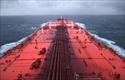
Saudi oil exports are on course to record their second-highest monthly level since the outbreak of the Iran-US War in late February 2026, according to data from Kpler, a company specializing in tracking shipments and commodities.
The data showed that the Kingdom's average oil exports reached 5.55 million barrels per day (bpd) from October 1 to 15, compared with 7.16 million bpd in September, which marked the highest monthly level since the war began.
Average exports in February stood at 7.33 million bpd, the highest level recorded since the beginning of the year.
According to Kpler data, exports through the Ras Tanura port on the Arabian Gulf averaged 2.98 million bpd during the first half of October, down from 4.16 million bpd in September.
Meanwhile, the Yanbu port on the Red Sea recorded average exports of 2.34 million bpd, compared with 2.54 million bpd during the same period, while other unspecified loading ports accounted for an additional 229,000 bpd.
The data highlighted Saudi Aramco's flexibility in managing oil export routes and redirecting shipments between the Arabian Gulf and the Red Sea by leveraging the East-West pipeline, which connects the Eastern Province to the port of Yanbu.
Exports through Ras Tanura came to a complete halt in April and May, prompting Yanbu to handle all Saudi oil shipments. Exports through Yanbu peaked in June at 4.29 million bpd, accounting for approximately 93 percent of total exports, compared with 815,000 bpd in February.
Aramco resumed ramping up exports through Ras Tanura after the East-West pipeline was targeted by drones launched from Iraq last September. During that month, exports through Ras Tanura nearly doubled those through Yanbu, the data showed. - Zawya
28/10/2026
Algeria Expands Green Shield Reforestation
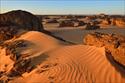
Between 2023 and 2026, the DGF restored 42,376.36 hectares of land. For the 2026-2027 period, the government plans to cover an additional 47,917 hectares, including a specific expansion of 34,000 hectares. This campaign involves the planting of 38.8 million seedlings of forest, fruit, and pasture crops, with 27.45 million units dedicated specifically to the Green Shield initiative.
Implementation is carried out by the Rural Construction Group (GGR) and private contractors, focusing on soil remediation in areas affected by fire and erosion, as well as the stabilization of mountain zones and watersheds. The updated program, launched in October 2023 in Djelfa province, is supported by a budget of 75 billion dinars (US$556.5 million).
Beyond environmental stabilization, the DGF is integrating the national forest fund into economic activity. In 31 provinces, 141 recreational forests were identified, with 77 sites covering 1,374 hectares already transferred for use. Additionally, 363 economic activity zones have been established for 3,710 beneficiaries, with 9,083 hectares allocated for sustainable agroforestry plantings.
28/10/2026
Minister: Egypt to Launch Eastern Mediterranean OBN Seismic Survey

Egypt will launch an offshore seismic survey using Ocean Bottom Node (OBN) technology in the Eastern Mediterranean on October 30, Karim Badawi, Minister of Petroleum and Mineral Resources, said during an inspection of the Commander survey vessel at Port Said Port. The project will initially cover 300 square kilometers across the Denise area off Port Said and Ras El Bar, as Egypt expands the use of advanced exploration technologies to identify new natural gas prospects.
The project is being implemented by the Egyptian Natural Gas Holding Company (EGAS) in cooperation with a consortium comprising SLB and technology and earth data company Viridien. The initial phase is scheduled for completion by the end of 2026, with further survey activities planned for 2027.
During the visit, Badawi said OBN technology had helped increase exploratory drilling success rates in the Gulf of Suez from 26% to 80%, highlighting its potential to improve exploration targeting, reduce drilling risks, and attract investment.
The Eastern Mediterranean project aims to generate high-resolution geological data to help identify promising natural gas structures beneath the seabed and support more informed decisions on exploration and drilling.
The project would also build on Egypt’s experience in the Gulf of Suez and integrate seismic findings from different regions, including the Nile Delta, to improve the assessment of geological structures and prioritize exploration targets. He stressed the need to adhere to the project schedule and accelerate data processing and interpretation so that the results can inform technical and investment decisions, Badawi noted.
Henning Berg, CEO and board member of Viridien, said the company had conducted approximately 80% of global OBN survey work, bringing experience from similar projects in the UAE and Saudi Arabia.
On October 18, the Ministry outlined a first phase covering approximately 18,000 square kilometers (km²), as part of a wider program targeting 95,000 km² of Egyptian waters. The 300-km² area in the latest announcement refers to the initial survey work in Denise and Ras El Bar, rather than the entire first phase.
In April 2026, the ministry reported that a new exploratory well in the South Wasl area of the Gulf of Suez delivered production of approximately 2,500 barrels per day of oil and 3 million cubic feet per day of gas. The ministry linked the result to improved geological imaging using OBN-based 3D seismic surveys.
28/10/2026